Type of production
There is different types of production, every type of production is different form each other even though some share similar aspects.
These are some types of Productions:
Film: Movies, or the production of animated films.
Television: TV Shows, reality shows or series.
Video: Music videos, advertisement videos etc.
Radio: Podcasts or Radio Programs.
Audio: Songs or audio guides for example
Interactive Media: This can refer to animations or games as well as music.
Web: Web designing or creation.
Computer game: This is pretty straight forward, creation of electronic games.
Print: Printing could be production of prints in general, photography (Albums) or it could link to newspapers and news.
Every one of them will have something unique and that is what makes them differ from each other.
Finance
To accomplish a project in within a production you need financing.
Depending the type of production what is required changes and so does the price, it could go up or down.
Different sources that will make the financing differ. (Requirements)
Equipment needed: There is no such thing as exact equipment, it all changes depending the people who produce, this can vary from PC's or Studio equipment to Clothing and Make-Up.
Crew: The crew can be really simple and small, this wouldn't offer a problem to the production but the price will go up when it comes to a big crew.
Materials Used: This is linked to equipment, materials use can go from Prop Creation to Clothing. Quality materials will make the price go up or the amount of materials used.
Facility Hiring: Hiring a facility will cost money, depending the facility prices could be really out of budget, some may be cheaper.
Clearances: If a clearance or similar is needed, it will have to be paid. Clearances are not usual in the majority of productions but some types may need it.
Time
Time is an important issue when it comes to completing a project, some aspects of the project will make it harder to complete it on time.
Deadlines: Fairly simple, dates for the project to be over.
Availability of Equipment: This is a really important aspect of production. Some equipment may be rented and this will put pressure upon the project as its use is limited.
Availability of Personnel: This is similar to equipment but its not just about the "renting" it could happen due to types of contract and schedules.
Clearances timescales: If a clearance is need it will need a timescale, this is not exact so it can change depending what is needed.
Personnel
Personnel hired can vary depending productions, some personnel may need to be more experienced or skilled than others.
Size: The size or the personnel changed depending the production, it could a team of 4 or 60. Sometimes it does not but usually, the size of the team matters if the project needs be completed on time (A smaller team will have to over-work and do extra hours and this could end up with a higher price than contracting someone)
Roles: This is the roles each member of the personnel will have, this is important as someone will not be able to do his best at role he/she is not familiar with. There are plenty number of rules but usually the is a Director, Director Assistant and minor roles (This is just to show a kind of Hierarchy in within roles, there is the one that supervises and controls everything and the ones doing the work).
Skills and Experience: Personnel must have a set of skills and experience within their job role. It could happen that a member of the personnel knows another role, but he/she won't know as much as someone experienced in the role. If the production is done by personnel without any skills or experience is not going to be good, not even a quarter or a production done by professionals, that is why the experience and knowing their abilities is important.
Availability: As mentioned before, you want a personnel whom's schedule is flexible and can adapt to your project, if not possible, problems and the project being slowed down is going to happen.
Some members may be there for only one month or some, but they may work as much as others. Flexibility is important to accomplish something in time.
Costs: This is fairly simple, more experience and skills = More money. If we look for people with years and years of experience the price that we will have to pay is higher than someone with only 2 or 3 years of experience.
Depending the funding and the "budget", contracting seniors and other personnel will high levels of experience will be easy or it could be a really difficult task.
Team or Crew CV's: When it comes to a CV, this is what will make you a potential worker. A company looks for the best CV and the best "player" in this case. If is shows in your CV all of your experience and skills, depending which ones of course, the job role will probably be yours as long as it suits the company or producers.
As a company, they will look for a "perfect" CV, they will have requirements for it and sometimes a simple work experience can make a huge difference. They want the project to be done in time and meeting their requirements so they will look for the best.
Facilities
When we talk about facilities, we usually think about studios, this is where most of productions are created.
It does not have to be a professional studio but some equipment may be important and necessary. The studio needs to meet your requirements, otherwise the overall production wont be as successful.
Production Equipment: Some equipment may be needed when producing, this could go from Scaffolding to Studios (Podcasts or so). Equipment in general is needed because a production wouldn't be possible to accomplish otherwise.
Post-Production Equipment:Equipment used in post-production can be used for VFX, Sound effects and processes that need to be done after filming, or making a game. This could be made of Music Studios, Any software to facilitate tweaks and changes or for example just simple editing to make it look okay.
Costs: Costs vary depending the facility, an example could be that the work space is really cheap but its really small, this could be a problem when producing, but the facility does not have to be too big as it would be a waste of space because it may not be used or a waste of money.
Availability: As mentioned in other topics, availability has to be counted on. If you are using a facility for an undefined amount of time it does not really matter, but if you have a specific amount of time the availability is important as you want to make the most of the time.
Outsourcing: Outsourcing is a big big way of accomplishing something in time. If your facilities do not let you complete a specific task, something than can be done is outsourcing those tasks. Let's say that you need "x" type of assets created in within a week, your facilities or personnel will not let you do it in time, this is when outsourcing comes along. You can have the help of other companies or professionals for specific tasks, it is basically having someone or something outside the box to help you.
Materials
Materials used in a project, is what "makes" the project. These materials go from Clothing to props or even library and archive materials.
Original materialist can be used too and what has to be done when it comes to materials is to create a Resource List before any project. This will give you a clear idea of what materials are going to be used and which are the materials needed for a specific task.
Usually, materials have a really wide range of "nature", there are a lot of different examples but some can be:
Original Materials
Archive & Library Materials or Photo-library Materials or Sound Library Materials
Audios - Scripts - Assets - Graphics
Costumes
Props
At the end every material will be different due to the types of Productions or tasks. And this also means that every material varies from a Material that has to be bought or original ones that can be found or created. Simple materials can have a big impact in the project.
Contributors
Most productions require contributors in the from of Funders-Kick-starters, Public Support-Forums, Experts-Sections that require a specialist or an expert outside the game company.
Specialists and Experts: Experts and Specialists may help contributing due to their "Wisdom", knowing tricky topics of the industry may help the project to overcome problems. It also helps when it comes to accomplish everything on time and perfectly.
Public: Public contributors usually refers to Forums or Community in general, a community contributes and gives help to newcomers. This is a really good for the image of the Company or creators in general.
Third parties: Third parties can contribute to the project, this could happen when outsourcing is needed, creation of assets for a game, need of equipment etc. The parties may contribute and help the project.
Funders: These people are the most important ones as they are the ones funding your projects, funders can const of Sponsors, a company itself or donations via Kickstarter projects.
Talent: Talent consists of Actors or Actresses for the project, this could be Voice actors or actresses for a game or animation as well general ones for films or TV Shows.
Contributors are the main structure of a project, this is because no project could happen without any type of contribution.
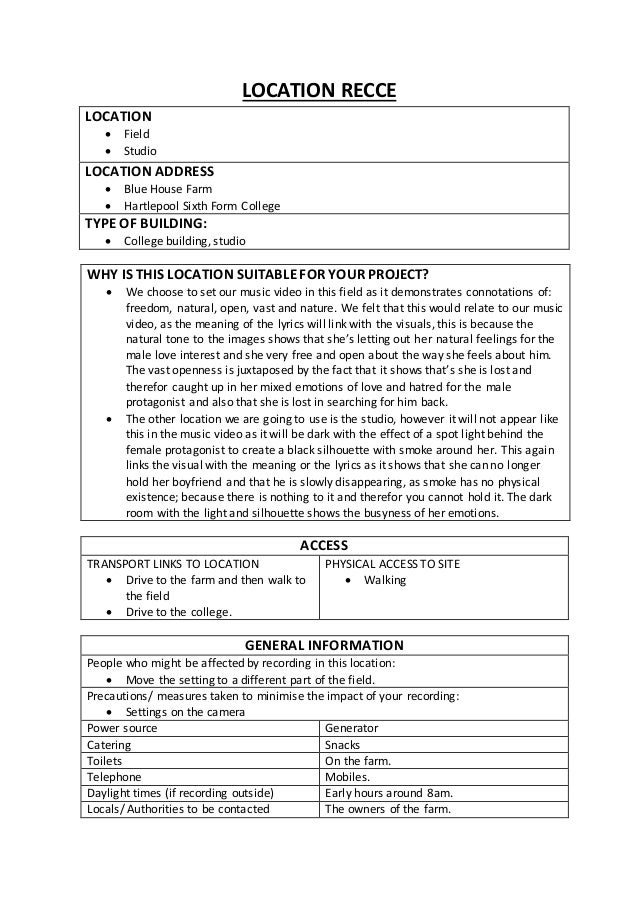
Locations
Locations happen when a project needs a specific environment, this can be working environment or reference locations. An example could be Game of Thrones and its various locations situated in different cities or countries.
When working in different locations some risks may happen and the project has to be regulated before everything starts.
Identification: Before any work and creation the location has to planned and identified. This is because a suitable location has to be found. You could have one really close and you don't know so the re-search is a big part of pre-production work.
Limitations and Risks (Cost, Distance, Access or even Weather): Every location has its limitations, this could be the cost. It could be really cheap as it would be public and this will be a really good option but if it is a private location the prices can go really high. Other limitations are the access and the distance, if it is too far away if not really accessible for the team.
Weather can have a huge impact in the project, a recording may be too difficult due to the weather or even the environment depending where is located.
Recces or Risk Assessments: Every location can have potential risk, if a film is situated in a dangerous natural environment, the potential risks are death to Poisonous animals or plants, this can happen if no professionals or specialists help the personnel. Other locations could have problems such as avalanches or natural "disasters".
It can also have minor risks, but even so, the safety of the team has to be ensured.
Codes of practice and regulation
If we talk about games being regulated we will usually come across Professional Bodies.
Professional Bodies are the responsible for regulating a game or a film. There are self-regulated videos or games but they need permission to self-regulate their products.
Some examples of Professional bodies are:
PEGI: This is a commonly used rating system in Europe (Pan European Game Information), PEGI labels games to have an age rating. PEGI ratings are 3 - 7 - 12 - 16 - 18.
Each rating in PEGI provides an indication of the suitability of the game content in terms of protection.(Minors)
PEGI is widely known when it comes to games, and it is one of the best Professional bodies when it comes to Regulating games, the system is even supported by console manufacturers such Nintendo, Microsoft or Sony. Publishers and developers of interactive games do support PEGI too.
PEGI was created and is owned by the Interactive Software Federation of Europe, it has administrators that regulate specific tasks examples are NICAM or VSC.
NICAM's taks is to check 3 and 7 games and VSC checks the higher age games: 12, 16 and 18.
UKIE: UKIE the trade body for UK's games and interactive entertainment industry. UKIE are a not-for-profit company and they represent business of any size, from small star-ups to known developers and publishers.
The cover different topics inside the industry, the are known to be the Voice of the Industry.
This is because they represent the industry in general and prevent any major problems and help to promote and to make good things happen.
They connect small business with the wider games industry and they even run big and positive campaigns for the game sector.
UKIE helps with Support (Advice/Guidance), Practical Support even IP protection or Data and Researching.
UKIE is the main body and structure in the UK (Games Sector and Industry).
OFCOM: OFCOM is known as The Office of Communications, this is the government-approved regulatory body for Broadcasting, Telecommunications and Postal industries in the United Kingdom.
OFCOM has different tasks as a regulatory body, these may include Licensing, Research, Codes and Policies, Complaints and even protecting the radio spectrum against Pirate Radio Stations.